Available for the 2027 - 2028 Academic Year
Building Thinking Classrooms
A classroom structured around 'Building Thinking Classrooms' practices encourages students to engage in deep mathematical reasoning. By utilising vertical non-permanent surfaces (whiteboards) and random groupings every class, we foster an environment where every student is a thinker and a problem solver. This approach shifts the focus from passive learning to active exploration, allowing for visible thinking and collaborative growth.

My Favourite Rich Tasks


Maths Integrated with Units of Inquiry

Mathematics is not a standalone subject but a vital lens through which we explore our world. This multidisciplinary approach ensures that learning is both conceptual and contextual, fostering a deeper understanding of mathematical principles within broader investigations.
My favourite integration was Kidpreneur, which included:
-
Negative numbers in context
-
Graphing on the coordinate plane and reflection
-
Measurement conversions
-
Scaling
-
Perimeter and area of rectilinear shapes
-
Addition and subtraction
-
Multiplication and division


After looking at my fictitious example in the newspaper, students designed their own businesses with partners, projecting losses and profits.

Students learned about graphing on the coordinate plane and then designed retail stores on all four quadrants. They also designed logos for their Kidpreneur businesses and reflected them across the x or y axis.

We looked at different product boxes, calculated their area and perimeter and scaled a box to twice the size or half the size.
We learned that a product box that is larger will also cost more to producers and business owners. The students connected this to their own businesses and packaging.


Kids learned to track sales for their Kidpreneur sale using reciept paper. Then, they explored how to calculate profits and their 25% donation to charity.


Kids measured and weighed their products in metric units and then converted to larger or smaller units. They learned to discern which unit would be best for their particular products. They also created product labels with imperial and metric measurments after learning that some customers require imperial measurements.
Maths and Creativity


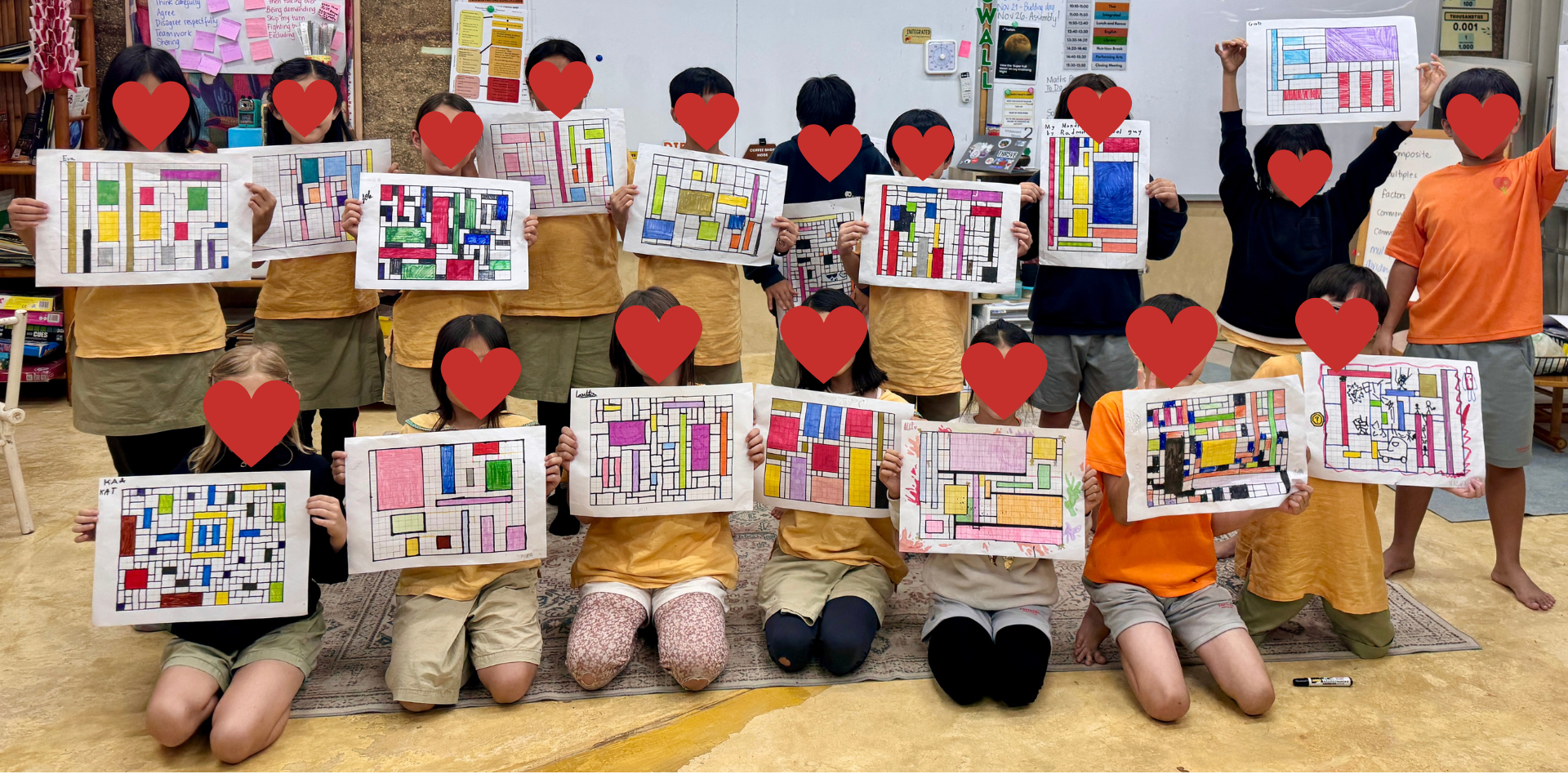
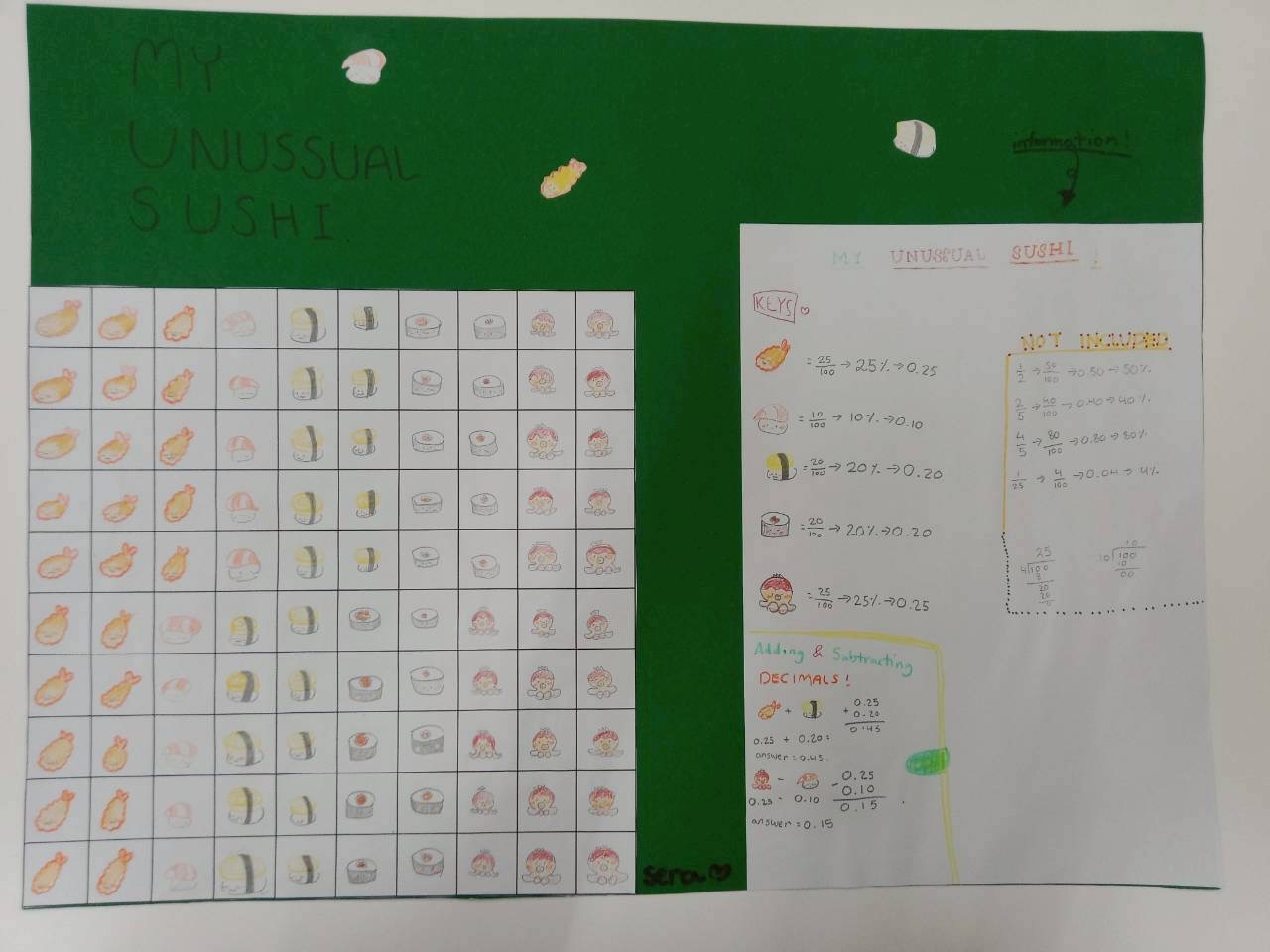
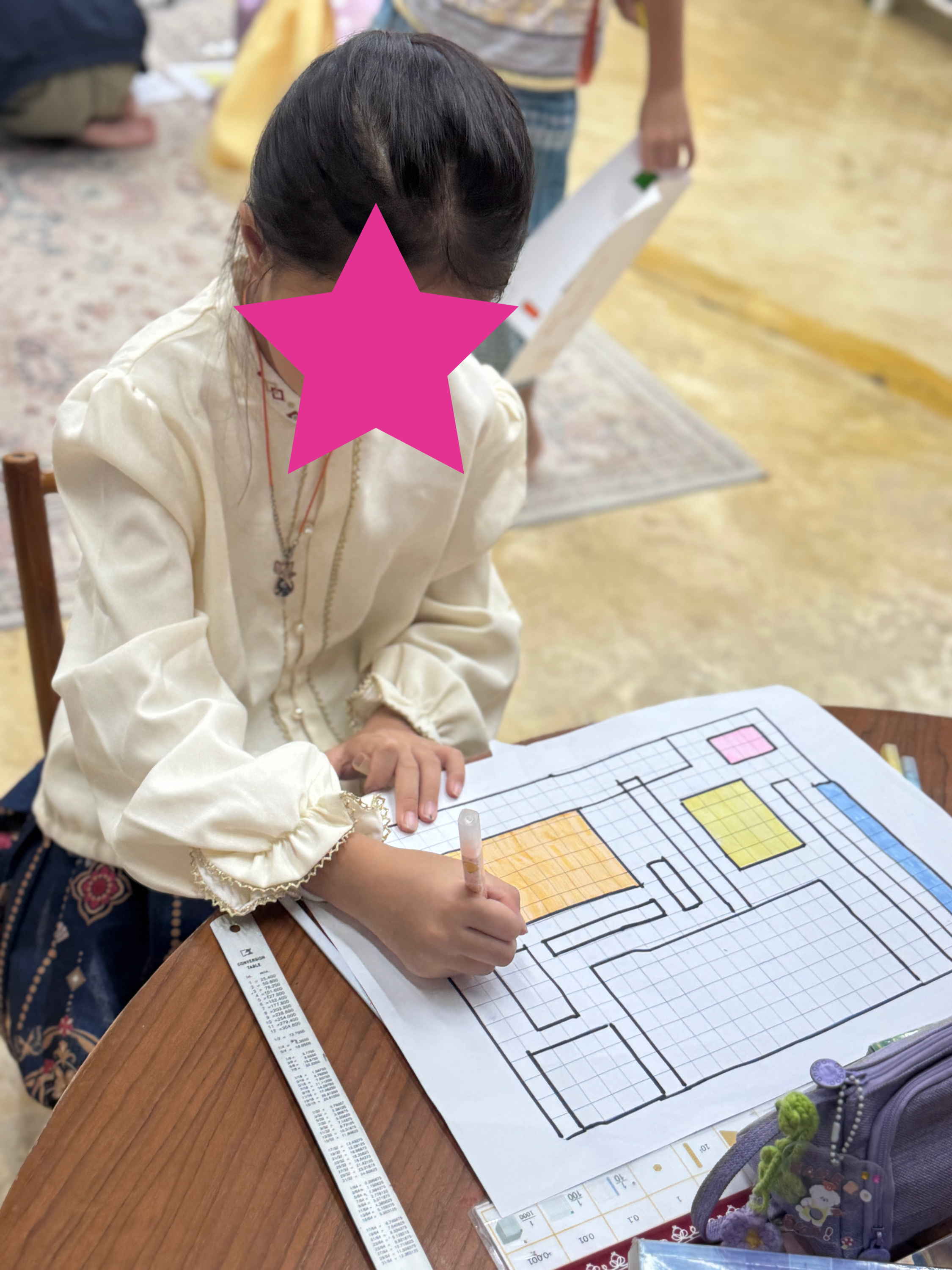
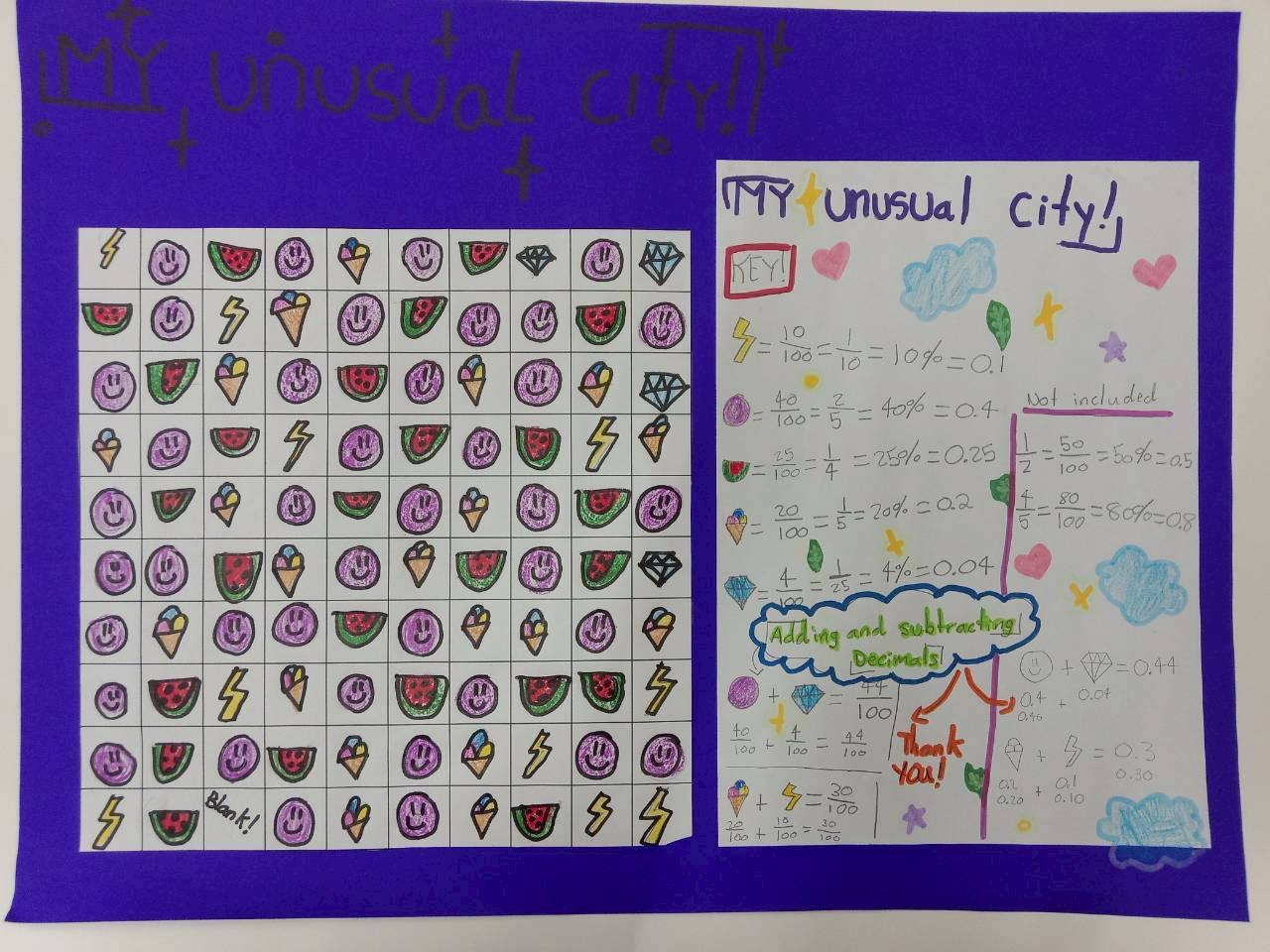
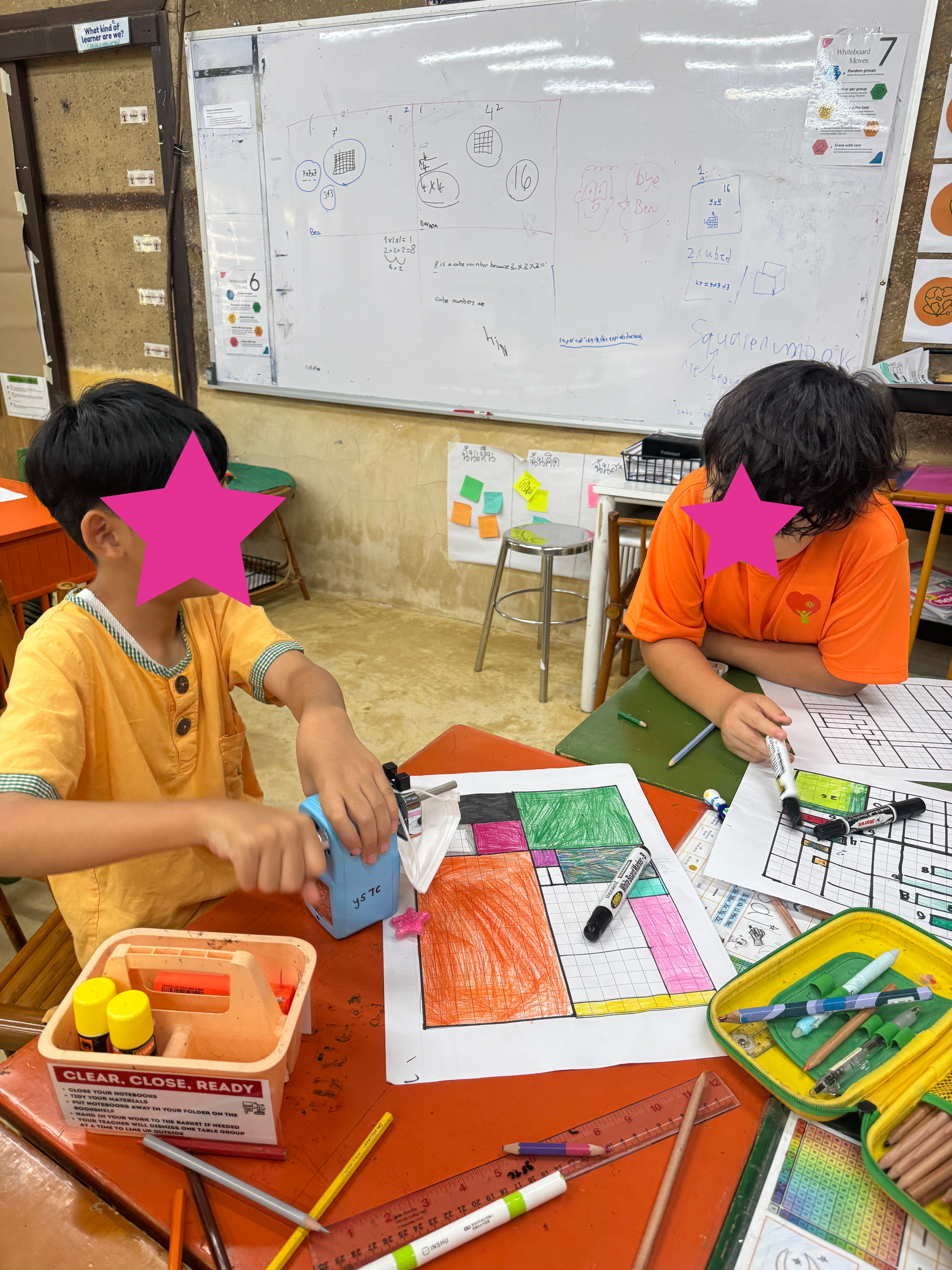
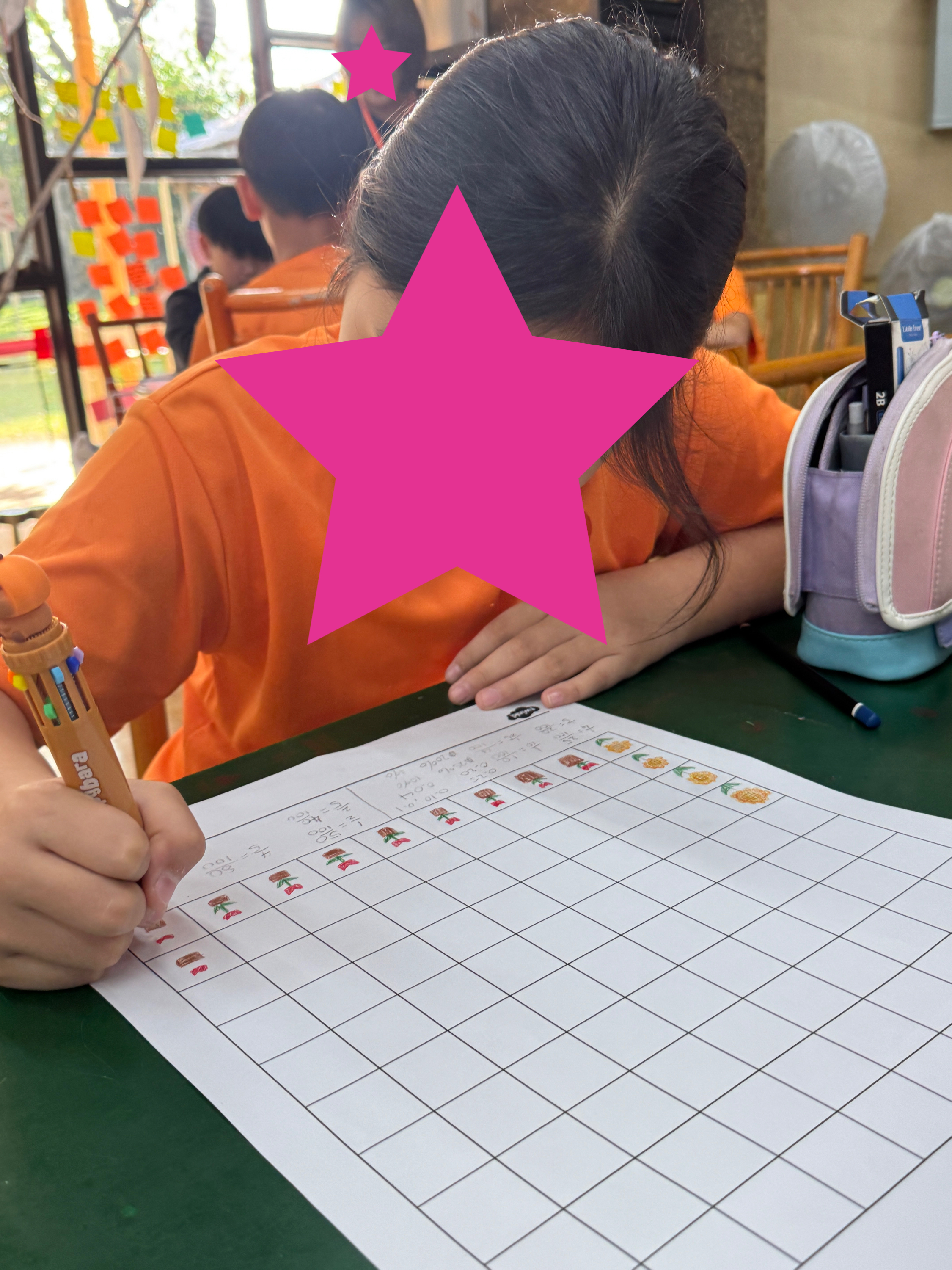
Exploring the intersection of logic and art, where mathematical concepts are brought to life through creative expression and imaginative problem-solving. This section will feature examples of student work and creative mathematical inquiries.
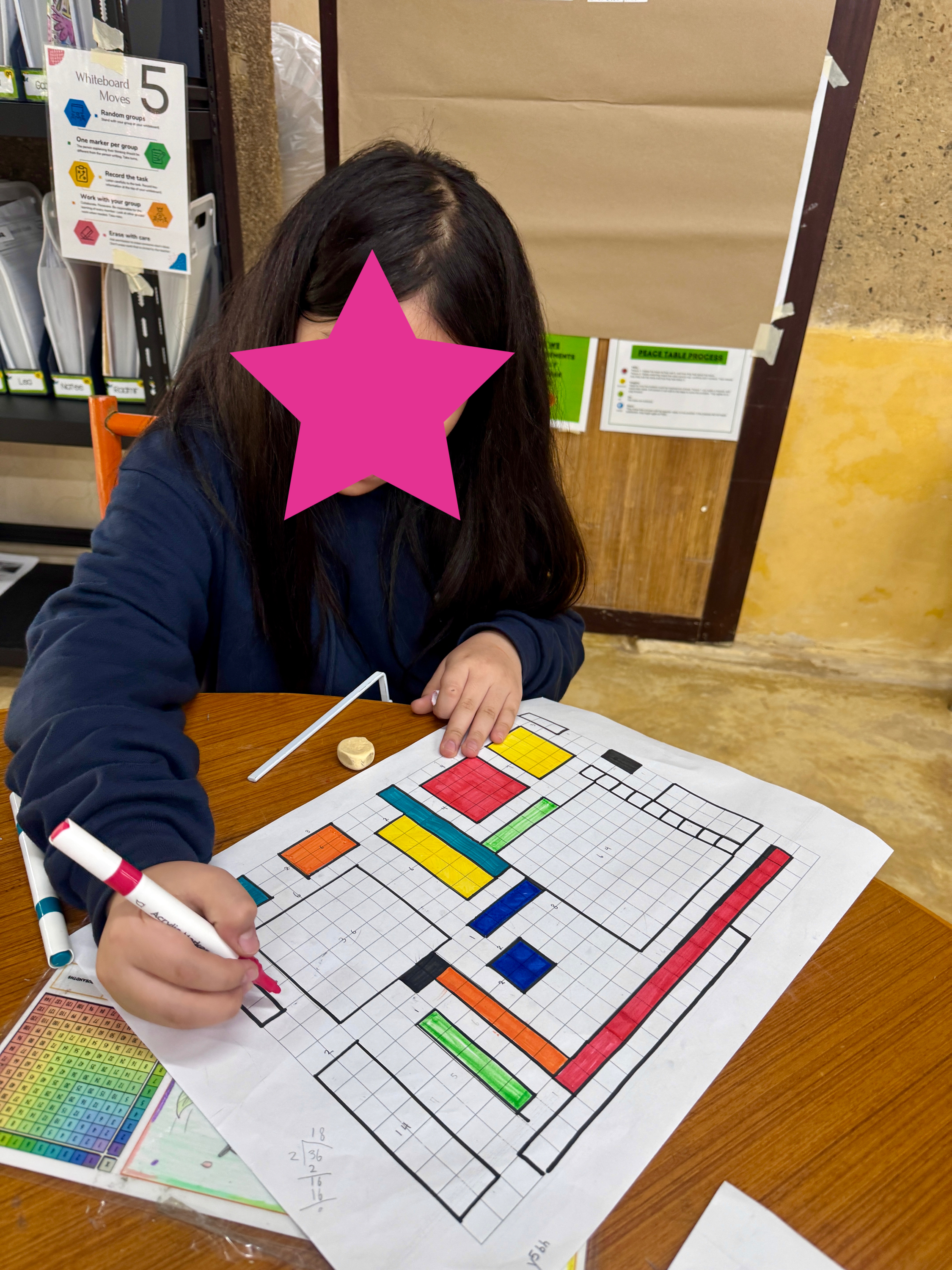
Mondrian Artwork Using Factor Pairs
Inspired by Pierre Mondrian, my students investigated factor pairs through art. They decided on areas for rectangles and created different rectangles to represent the same area. They discovered square numbers for values like 9 and 25.
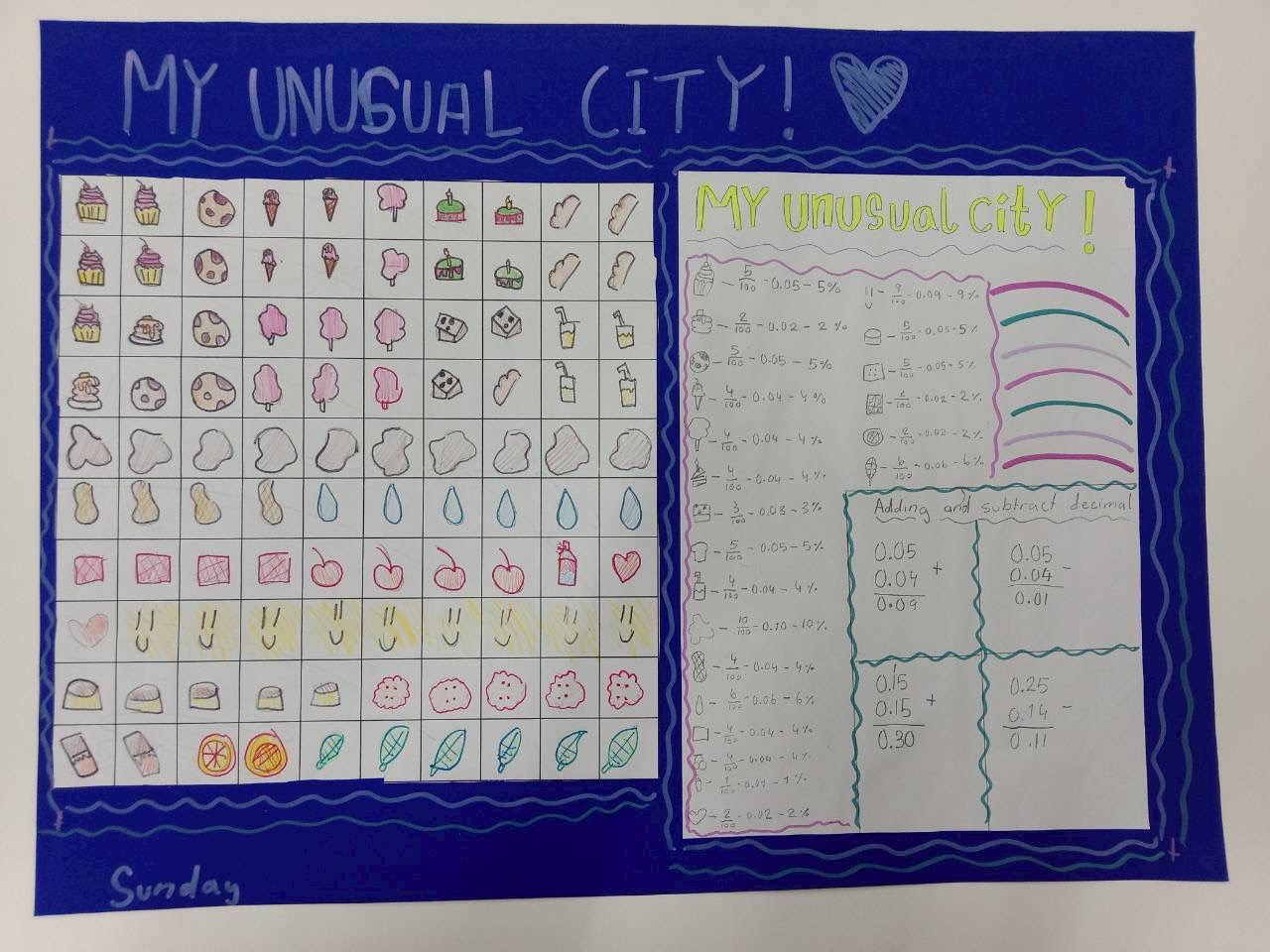
The Unusual City Converting Between Decimals, Fractions and Percentages
Design an unusual city on a 100-square or 144-square grid to represent different fractional amounts and demonstrate which percentages and decimals are equivalent.